Sizing a hose correctly is fundamental to fluid power performance, system efficiency, and overall component lifespan. Whether you are designing a new fluid layout or replacing a line on existing machinery, selecting the proper inside diameter ensures your system operates safely without unnecessary energy loss or heat build-up.
Here is what you need to know to size your hose accurately.
1. Key Factors Influencing Hose Size
To determine the correct hose size, you must evaluate system dynamics as a whole rather than relying on a single measurement. Base your hose dimensions on:- Required Flow Rate: The volume of fluid that must pass through the system (typically measured in GPM or L/min).
- Acceptable Fluid Velocity: The speed at which fluid moves through the line. Keeping velocity within recommended ranges prevents turbulence and system stress.
- Pressure Loss: Friction along the inner wall creates a pressure drop over distance.
- Hose Length: Longer hose runs create more flow resistance, requiring careful diameter selection to maintain line pressure.
- Fluid Properties: Viscosity, density, and operating temperature impact how fluid behaves under flow.
- Fittings & Connections: The quantity, size, and geometry (e.g., straight vs. 90° elbows) of end fittings contribute to overall restriction.
2. Inside Diameter vs. Outside Diameter
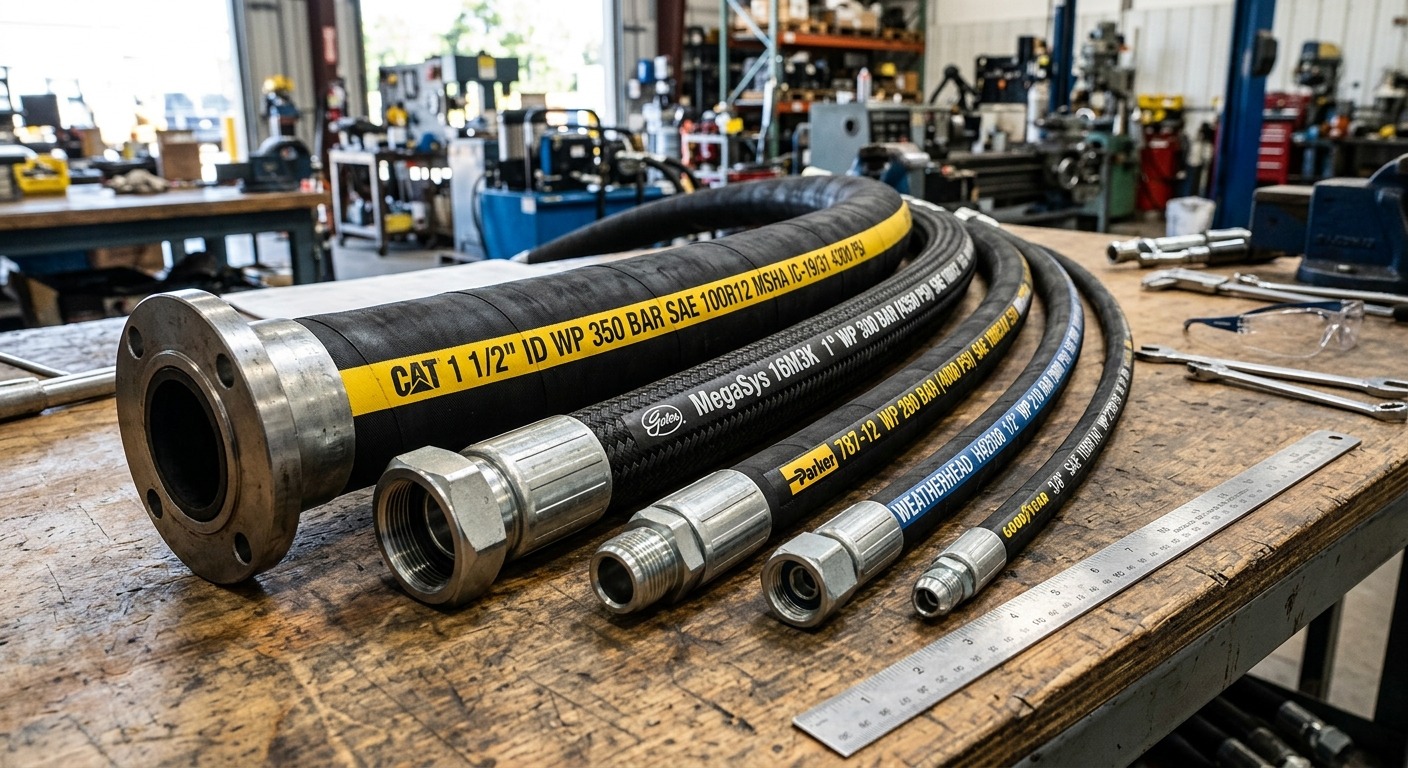
When evaluating flow, inside diameter (I.D.) is far more important than outside diameter (O.D.).- Inside Diameter (I.D.): Controls the actual cross-sectional area available for fluid movement.
- Outside Diameter (O.D.): Dictates external clearance, bend radius, and protective sleeve sizing, but gives no indication of flow capacity. Two hoses with the same outside diameter can have significantly different inside diameters depending on wall thickness and reinforcement layers.
3. The Risks of Incorrect Sizing
Getting the hose size wrong in either direction creates performance problems:- Hose Too Small: An undersized line restricts fluid flow and forces fluid velocity up. This creates severe pressure loss, excessive turbulence, and extreme heat generation that accelerates seal and fluid degradation.
- Hose Unnecessarily Large: An oversized hose adds unnecessary weight, costs more, requires a larger bend radius, and can be significantly harder to route through tight machinery spaces without fitting the intended system layout.
4. Don’t Rely on Dash Sizes Alone
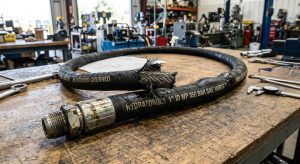
A common trap during replacement is relying solely on printed “dash numbers” without verification.- While dash sizes traditionally represent measurements in sixteenths of an inch (e.g., -08 = 8/16″ or 1/2″), dash size conventions can vary between standards, hose types, and manufacturers.
- Always check current manufacturer datasheets and physical inner diameter specs rather than assuming a dash number across different brands or product lines maps to the exact same interior dimensions.