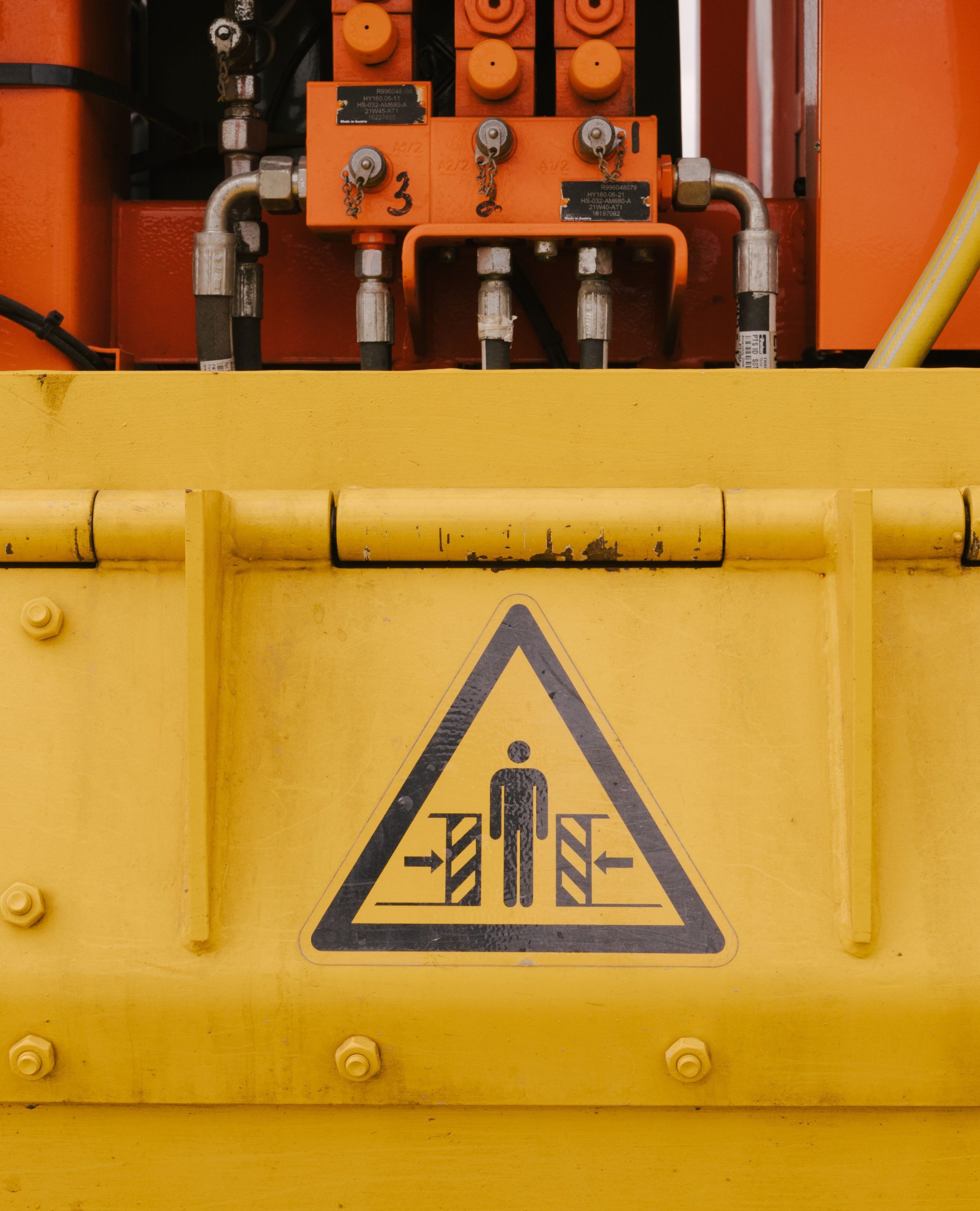
Hydraulic systems operate under extremely high pressures—often exceeding several thousand PSI. While fluid power provides incredible strength for machinery, pressurized hydraulic oil presents severe risks, including pinhole fluid injection, severe burns, crushed limbs, and high-pressure blowouts.
Following proper safety protocols when inspecting, servicing, or operating hydraulic machinery is essential to protecting yourself and your team.
1. Never Work on a Pressurized System
- No Active Adjustments: Never attempt to inspect, tighten, disconnect, or repair a hydraulic fitting, hose, or component while the line is pressurized.
- Relieve Stored Pressure: Shut down the equipment completely, isolate hazardous energy sources (Lockout/Tagout), and relieve all trapped or residual system pressure strictly according to the equipment manufacturer’s instructions before starting any work.
2. Secure Mechanical and Suspended Loads
- Prevent Unintended Drop: Hydraulics hold heavy loads through fluid pressure. If a line fails or a valve is released, raised components can instantly drop.
- Lower or Block: Always lower booms, buckets, beds, and hydraulic lifts to the ground or mechanically secure them with safety stands/pins before working around or beneath them.
3. Never Use Hands to Check for Leaks
- Pinhole Hazard: A high-pressure hydraulic leak can easily escape through a microscopic hole. At high velocity, fluid escaping a pinhole can act like a needle, penetrating skin and clothing effortlessly.
- Safe Inspection Methods: Never use your hand, fingers, or any part of your body to feel for a hydraulic leak. Always use a piece of cardboard, wood, or a specialized inspection tool to locate suspected leaks.
4. Wear Required Personal Protective Equipment (PPE)
- Mandatory Safety Gear: Always wear appropriate personal protective equipment required by the equipment manufacturer, site procedures, and job safety assessment.
- Essential Gear: This typically includes impact-resistant eye protection/face shields, heavy-duty protective gloves, high-visibility clothing, and steel-toe safety footwear.
5. Treat Fluid Injection as an Immediate Medical Emergency
- Deceptive Appearance: High-pressure fluid injection injuries can look deceptively minor at first—often appearing as nothing more than a small pinprick, slight swelling, or minor sting.
- Severe Consequences: Internally, toxic hydraulic fluid rapidly destroys tissue and causes catastrophic inflammation, which can lead to gangrene, amputation, or systemic toxicity.
- Immediate Action: Treat any suspected high-pressure fluid-injection injury as an immediate medical emergency. Transport the injured person to an emergency facility right away and inform medical personnel that a high-pressure fluid injection injury has occurred.