Selecting the correct hydraulic hose is essential for keeping equipment running efficiently, preventing unexpected downtime, and protecting operators from high-pressure hazards. Choosing the wrong hose can lead to premature failure, fluid leaks, or catastrophic line blowouts.
To ensure long-term performance and safety, follow these key guidelines when choosing or replacing a hydraulic hose.
1. Confirm the Core Specifications (STAMPED)
A reliable starting point for any hydraulic hose selection is confirming the primary operating conditions:
- Size: Match the inner diameter (I.D.) precisely. An undersized hose causes fluid restriction, excessive heat, and pressure drops, while an oversized hose adds unnecessary weight and cost.
- Temperature: Verify both the fluid temperature and ambient environmental temperature. Exceeding rated limits degrades the inner tube and hardens the outer cover.
- Application: Identify where and how the hose will be used. Consider flex requirements, continuous duty cycles, and specific industry standards.
- Media / Fluid: Ensure complete chemical compatibility between the inner hose tube, seals, O-rings, and the hydraulic fluid or chemical being conveyed.
- Pressure: Select a hose with a maximum working pressure equal to or greater than the maximum system pressure.
- End Connections: Identify the exact thread style, seat angle, and flange type required for leak-free mating with your equipment ports.
2. Factor In Real-World Operational Conditions
Standard rating charts don’t tell the whole story. To maximize hose service life, evaluate these critical operational factors:
- Pressure Spikes & Impulse Cycles: Account for sudden surges above normal operating limits. High-frequency pressure pulses require heavy-duty wire-braided or spiral-wound hoses.
- Movement & Minimum Bend Radius: Ensure the hose can flex freely without exceeding its minimum bend radius. Bending a hose too tightly strains reinforcement layers and drastically cuts service life.
- Routing & Abrasion: Plan proper hose routing to avoid contact with sharp edges or moving parts. Use protective sleeves or heavy-duty abrasion-resistant covers where contact is unavoidable.
- Environmental Exposure: Consider UV light, ozone, saltwater, extreme heat, or chemical splashes that could degrade the outer jacket over time.
3. Use Matched, Manufacturer-Approved Systems
Hydraulic hoses and fittings are engineered to work as a unified system:
- Compatible Components: Always use hose, end fittings, crimping tooling, and crimp die specifications approved as a compatible system by the manufacturer.
- Avoid Mixing & Matching: Never mix fittings from one manufacturer with hoses from another unless explicitly certified. Improvised assemblies can fail under pressure and void manufacturer warranties.
4. Don’t Rely on Appearance or Partial Part Numbers
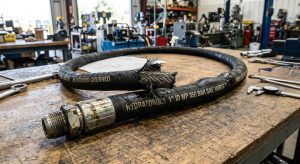
One of the most common mistakes in hydraulic maintenance is selecting a replacement based solely on how the old hose looks or matching a partial part number.
- Outer dimensions and covers can be misleading regarding internal pressure ratings or liner materials.
- Partial or worn-off part numbers often omit critical suffixes specifying pressure series, cover types, or inner tube compounds.