Proactive maintenance is the key to maximizing hose service life, avoiding unexpected system downtime, and ensuring workplace safety. Hydraulic and industrial hoses work under severe conditions, and routine care helps identify minor issues long before they escalate into dangerous failures or costly line blowouts.
Here are essential hose maintenance tips to incorporate into your daily operations and preventive maintenance programs.
1. Establish Inspection Routines
- Operator Checks: Perform quick daily visual checks before operating equipment to catch obvious leaks, loose fittings, or surface damage.
- Scheduled Detailed Inspections: Implement formal, scheduled inspections based on service severity, operating environment, and manufacturer guidelines. High-duty cycle or high-pressure applications require more frequent, in-depth reviews.
2. Keep Hoses Clean for Clear Visibility
- Remove Dirt and Buildup: Regularly clean oil, grease, mud, and industrial debris off hose exteriors.
- Enable Accurate Inspections: A hose caked in grime hides dangerous cracks, blisters, wire braid exposure, and pinhole leaks. Keeping surfaces clean ensures damage is immediately visible during routine checks.
3. Protect Hoses from External Hazards
- Guard Against Physical Damage: Shield hoses from constant rubbing, high ambient heat sources, sharp machine edges, and pinching from moving equipment components.
- Use Protective Sleeves: Install abrasion-resistant sleeves, fire sleeves, or spring guards in high-wear areas to shield the outer jacket from premature wear.
4. Maintain Bend Radius and Avoid Twisting
- Respect Minimum Bend Radius: Never force a hose into a bend tighter than the manufacturer’s specified minimum bend radius. Bending too sharply strains reinforcement layers and drastically cuts service life.
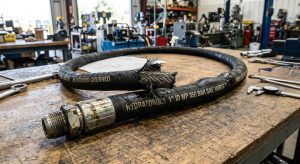
- Prevent Installation Twist: Ensure the layline (printed lettering) along the hose runs straight. A twisted hose severely restricts flow and degrades under pressure cycles much faster than a straight assembly.
5. Secure Hoses Properly
- Use Correct Clamping: Secure hoses with proper hydraulic clamps to keep them organized and away from hazards.
- Allow Necessary Movement: Ensure clamping holds the hose firmly without crushing it or restricting its natural expansion, contraction, and required flex paths during machine operation.
6. Address Leaks and Investigate Failures
- Correct Leaks Promptly: Never ignore minor dampness or seeping fluid at connection points. Depressurize the system and fix leaks right away to prevent blowouts and fluid contamination.
- Investigate Repeat Failures: If a hose repeatedly fails in the same location or circuit, treat it as a symptom of a larger issue (such as pressure spikes, extreme heat, or improper routing) and conduct a full system review.
7. Practice Proper Hose Storage
For unused or bulk replacement hose, storage conditions directly impact shelf life:- Ideal Environment: Store unused hoses in a clean, cool, and dry indoor area.
- Keep Away from Degrading Elements: Protect stock from direct sunlight (UV rays), intense heat sources, harsh chemicals, and ozone-producing equipment like electric motors or arc welders, which cause rubber to harden and crack over time.
8. Maintain Detailed Service Records
- Track Assembly History: Where practical, log the location, exact part number, installation date, and inspection history for every hose assembly in your facility or fleet.
- Enable Preventive Replacement: Tracking service age allows you to schedule planned replacements before age-related fatigue leads to unexpected on-site failures.